
33
Published
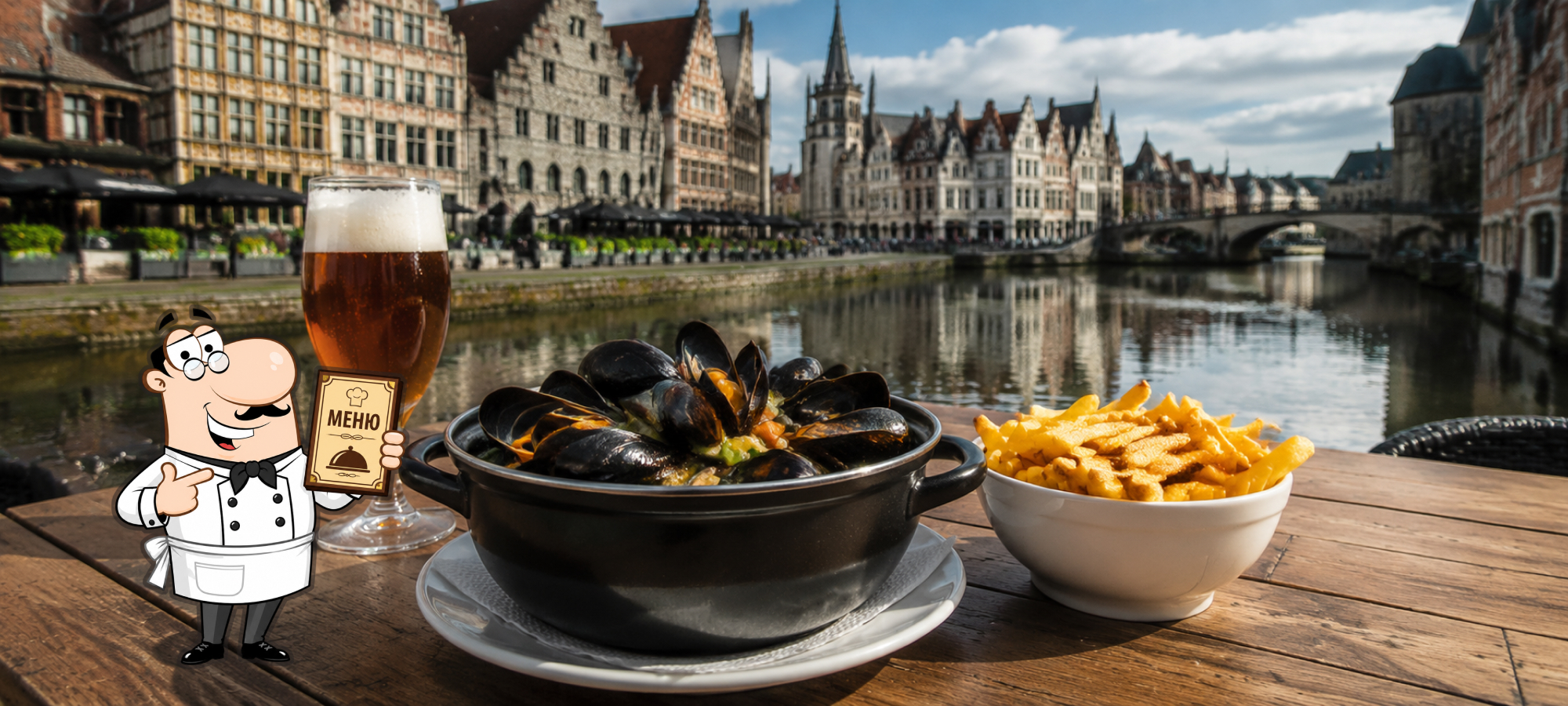
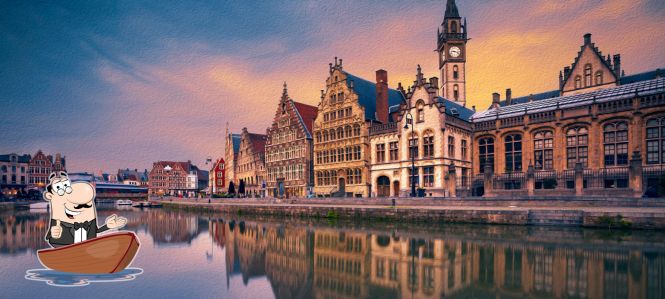
Ghent is one of those cities that does not need to shout to be remembered. It has medieval towers, canals, old guild houses and narrow stone streets, but it also has a young, creative energy that keeps the city from feeling like an open-air museum. This guide is about seeing Ghent through both its streets and its food. The city is perfect for slow wandering: along the Graslei and Korenlei, through hidden courtyards, around markets, bridges, and churches, and through neighborhoods where everyday life feels close. But Ghent also deserves to be tasted properly — cozy brasseries and modern restaurants are waiting for you.
1. St. Bavo’s Abbey
 Source: https://visit.gent.be/en/see-do/st-bavos-abbey
St. Bavo’s Abbey is one of the best places in Ghent to understand how old the city really is. It stands in the Portus Ganda area, near the point where the rivers Scheldt and Leie meet — the place where early Ghent began to grow. It is also important not to confuse it with St. Bavo’s Cathedral in the city centre: the abbey is a separate historic site, quieter and with more of its history worn away.
The abbey was founded in the 7th century by Saint Amandus, a missionary who played a major role in Christianizing this part of Flanders. For centuries, the monastery was one of Ghent’s religious and cultural centres.
The most dramatic moment in the abbey’s history came in 1540. After Ghent rebelled against Emperor Charles V, he punished the city and ordered the abbey to be demolished. A Spanish fortress was later built on the site, turning a religious centre into a symbol of imperial control.
St. Bavo’s Abbey is worth visiting if you want to see a less obvious part of Ghent. It is not as decorative as the Graslei, not as central as the Belfry, and not as famous as St. Bavo’s Cathedral. But it gives the city more depth: here you see early medieval Ghent, the power of the abbeys, the punishment after the 1540 revolt and the traces of a place that shaped the city long before the tourist centre existed.
Per Bacco


Per Bacco
#25 of 231 Italian restaurants in Ghent, Belgium
Sint-Jacobsnieuwstraat 56, Ghent, Flanders, Belgium
Closed until 6PM

Pasta
Pasta is a type of Italian dish that is commonly made from unleavened dough of wheat flour. It is a versatile food that can be served in a variety of ways, such as in soups, salads, or as a main dish with sauces and other ingredients. It's a staple in many cuisines around the world due to its simplicity, delicious taste, and nutritional content.
Per Bacco is a practical restaurant choice after St. Bavo’s Abbey because it is located at Sint-Jacobsnieuwstraat 56, on the way from the Portus Ganda area toward the historic centre of Ghent. The restaurant has been open since 2006 and describes its concept as an osteria: Italian wines combined with simple dishes, artisan products and seasonal cooking. The menu is not built around pizza. Per Bacco focuses on a more classic Italian structure, with antipasti, pasta-style first courses, main dishes and desserts. For the full meal, the restaurant recommends a seasonal four-course menu.
The exact dishes change with the season, but the menu may include antipasti, fresh homemade pasta, tortellini with truffle, pasta with artichoke, octopus, monkfish, quail, veal tongue, Italian cheeses and tiramisu. For groups of at least 10 people, Per Bacco offers an “Italian walk” menu: a selection of antipasti, followed by large bowls of different pastas — fish, meat and vegetarian — and a homemade dessert.
Choose it for a proper lunch or dinner with Italian wine, pasta, seasonal dishes and dessert, not for a fast bite between attractions. There is also a small inner terrace, so in good weather it can feel more relaxed than eating on one of the crowded central streets.
2. Great St. Elizabeth Beguinage
 By User:LimoWreck - Own work, CC BY-SA 3.0
The Great St. Elizabeth Beguinage is worth adding to a Ghent route. It is located in Sint-Amandsberg, just outside the old centre, so it works better as a separate stop than as something to squeeze between two central landmarks.
The beguinage was built in 1873–1874, after the beguines left the older St. Elizabeth Beguinage in central Ghent. Beguines were religious women, but they were not nuns. They lived in a Catholic community, followed rules such as chastity, obedience and simplicity, but they did not take permanent monastic vows. They also had to support themselves, which makes beguinages different from convents. In Ghent, this history is still readable in the layout: narrow streets, brick houses, communal buildings and the central church create a self-contained neighborhood.
The Great St. Elizabeth Beguinage is also part of the UNESCO-listed Flemish beguinages, so it is not just a quiet local corner. It shows a specific form of women’s religious and social life that was especially important in Flanders. Today, there are no beguines living here, but the streets still keep the structure of the original community.
Mortier Gent


Mortier Gent
#32 of 309 seafood restaurants in Ghent, Belgium
Dampoortstraat 31, Ghent, Flanders, Belgium
Closed until 6PM
Mortier Gent is located on Dampoortstraat, close to Gent-Dampoort station, so it fits naturally after a route through Sint-Amandsberg.
Mortier is both a restaurant and a coffee roastery. The restaurant is run by the Mortier brothers: Thomas works in the kitchen, while Pieter is connected with the coffee side and the dining room. The kitchen is seasonal and Italian-inspired, with a focus on fresh pasta, risotto prepared à la minute, local products and simple combinations built around good ingredients.
The menu changes regularly, so it is better to describe Mortier by its style rather than as a place for one fixed dish. At lunch, the food is usually more casual, with homemade pasta, sandwiches and toast. In the evening, the restaurant becomes more dinner-focused, with dishes such as gorgonzola and kale tart, pork shank osso buco, fresh pasta with romanesco, seasonal vegetables, fish, meat and vegetarian options. Coffee is also important here, because Mortier roasts its own beans in-house.
3. Campo Santo Cemetery
 Source: https://visit.gent.be/en/see-do/campo-santo-artistic-cemetery
Campo Santo Cemetery is a strong next stop after Great St Elizabeth Beguinage because both places are in Sint-Amandsberg, outside the usual historic-centre route.
The first thing to notice is the hill. Campo Santo lies on a natural rise about 19 metres high, which is unusual in this flat part of Ghent. At the top stands the late-Baroque Sint-Amandus Chapel, built in 1720. Local tradition connects the hill with Saint Amandus, who is said to have preached here in the 7th century.
The cemetery itself became important in the 19th century. The oldest protected sections date from 1847 and 1856, and the place was inspired by Père Lachaise in Paris. It quickly became a prestigious burial ground for Ghent’s Catholic bourgeoisie, but not only for them. Writers, artists, composers, politicians, freethinkers and cultural figures are also buried here, which is why Campo Santo often feels like a historical map of Ghent carved in stone.
Come here for the funerary architecture as much as for the names. The cemetery has monumental family tombs, sculpted angels, crosses, chapels, stone reliefs and old graves shaded by trees. Part of the site has protected heritage status, and more than 100 tombs are considered valuable funerary monuments. For a focused walk, look for the graves connected with figures such as Jan Hoet, Luc De Vos and Marc Sleen, or use the Campo Santo walking plan available through Ghent tourism.
Sahara restaurant


Sahara restaurant
#114 of 1702 restaurants in Ghent, Belgium
Dampoortstraat 52, Ghent, Flanders, Belgium
Open until 11PM

Kebabs
Some people consider a kebab to be a Russian dish, but it’s not true. It came to Russia from the eastern cuisine. The traditional kebab is prepared from meat: pork, beef, lamb. To make the dish tasty, meat should be not fat. A kebab is grilled and served with vegetables and wine.
Sahara Restaurant is located at Dampoortstraat 52, close to Gent-Dampoort station, so it is more practical for this part of the city than returning immediately to the historic centre.
The menu is built around Syrian and Middle Eastern-style food, with grilled dishes, mezze and warm sharing plates. It is better for a relaxed dinner than for a formal restaurant stop: the kind of place where the table can start with several small dishes before moving to grilled meat, falafel or fish.
Good dishes to mention are hummus, baba ghanoush, moutabal, fattoush, tabbouleh, fried cauliflower with tahini, fried aubergine with tomato sauce, beans with vegetables and olive oil, cheese börek and kibbeh. For something more filling, the menu includes shawarma arabi, shish taouk, falafel, kebab BBQ, grilled chicken, mix grill and dorade royale served with sides. One of the more specific dishes is toshka: lamb mince with Syrian cheese cooked on the grill.
The cemetery gives you quiet streets, old graves and local history; this restaurant brings the day back to something warmer and more social.
4. Dr Guislain Museum
 Source: https://visit.gent.be/en/see-do/dr-guislain-museum
Dr Guislain Museum is one of the most unusual museum stops in Ghent. The museum is located at Jozef Guislainstraat 43B, in the Bloemekenswijk area, not in the postcard centre of Ghent. That location matters: the museum is housed in the former psychiatric institution known as the Hospice pour hommes aliénés, completed in 1857.
The building itself is part of the visit. It was designed as a 19th-century psychiatric hospital, with long brick wings, courtyards, arched galleries and a chapel-like central structure. It was connected with Joseph Guislain, a Ghent doctor and one of the early figures in Belgium who argued that people with mental illness should be treated as patients, not as criminals or outcasts.
The museum opened in 1986 and focuses on the history of psychiatry, mental health, stigma and outsider art. Its collection is divided into two main parts: medical and psychiatric history, and an art collection. Inside, visitors can see historical objects, documents, photographs, archives, artworks and exhibition rooms that show how ideas about “normality,” treatment and mental illness have changed over time.
Cafe Rabot


Cafe Rabot
#114 of 1283 cafes in Ghent, Belgium
Begijnhoflaan 360, Ghent, Flanders, Belgium
Open until 10PM

Tapas
Tapas refers to any snack served at the bar for beer or wine. It can be nuts, chips or olives, or independent dishes like seafood, sandwiches, different cold and hot appetizers. Often, small "tapas" are included in the cost of the drink. A popular entertainment of the Spaniards is to move from the bar to the bar, drinking wine or beer and eat tapas.
Café Rabot, now also branded as Barrabot, is a practical stop after Dr Guislain Museum if you are walking back toward Rabot and the old beguinage area instead of going straight into central Ghent. It is located at Begijnhoflaan 360, close to the Rabot neighborhood, so it fits this route better than a restaurant around Graslei or Korenmarkt.
The place works more as an aperitif bar than as a formal restaurant. Its concept is built around tapas, cocktails and small dishes to share, with Mediterranean and Latin-Italian influences. This makes it a good choice after the museum if you want something lighter and more social: a drink, a few plates on the table and a slower pause before continuing the evening.
The food menu includes olives, bruschetta, cold tapas, mozzarella board, croquettes, warm tapas mix, focaccia with salad, focaccia with fries, mini pizza and pizzella in versions such as Margherita, four-cheese and spicy. There is also a Barrabot sandwich, which makes the place useful not only for evening drinks but also for a casual daytime stop.
The drinks list is longer than the food menu. It includes beer, wine, cava, hot drinks and cocktails such as gin tonic, Cuba Libre, Cosmopolitan, Espresso Martini, Aperol Spritz, Mojito, Strawberry Mojito and Caipirinha. The house cocktail is called Barrabot.
5. De Krook
 By Paul Hermans - Own work, CC BY-SA 4.0
De Krook is the city library, but it does not feel like a quiet building used only for borrowing books. It is a public place for reading, studying, working, exhibitions, talks, coffee and city views.
The building is located at Miriam Makebaplein 1, on a bend of the Scheldt. The name comes from that curve in the river: “krook” means bend, and the area was once called Waalse Krook because coal from Wallonia was brought here by boat. This detail makes the building more interesting for a travel route, because it is not just modern architecture placed randomly in the city; it stands on a former industrial waterside site that was given a completely new public function.
De Krook opened in 2017 and was designed by Ghent-based Coussée & Goris Architecten together with the Catalan studio RCR Arquitectes. The building is easy to recognize: dark horizontal layers, exposed steel, concrete and glass, large windows, terraces and strong lines facing the water.
Inside, De Krook houses the public city library, spaces connected with Ghent University and imec, meeting rooms, study areas and a café with a terrace. It is a useful stop even for travelers who do not plan to read or work: walk around the exterior, cross the bridge, look at the stacked structure from the water side, then go inside for the views from the upper levels. The building also includes artworks by Michaël Borremans, a Belgian painter whose figurative work has shown at MoMA and the Guggenheim, so it works as a small architecture-and-culture stop, not only as a library.
Mission Masala


Mission Masala
#191 of 1702 restaurants in Ghent, Belgium
Bij Sint-Jacobs 19, Ghent, Flanders, Belgium
Closed until 6PM

Fried chicken
Fried chicken is very popular and appetizing! It has a golden crust on top, and inside it is softly juicy meat, and even cooking does not require special virtuoso skills. It can be consumed in a separate form, and in combination with potatoes, salads, vegetables, rice and even some fruits.
Mission Masala is a good dinner choice after De Krook if you want the route to move from modern architecture to a louder, more colorful side of Ghent. This is not a traditional quiet curry house. Mission Masala started as a food-truck concept and now serves Indian street-food-inspired dishes with Western influences, strong spices, bright interiors and a sharing-menu style. The Ghent restaurant is connected with Tim and Pavan, whose North Indian and London food background gives the place its mix of Indian flavors and international street-food energy.
The menu is built for ordering several plates for the table. Meat and fish dishes include Mission fried chicken with madras mayo and pickled cucumber, pulled pork tacos with coorg spices and tamarind sauce, chicken mo dumplings, sticky goan ribs, Badboy seekh with lamb, Moilee Gambas and Boom Ting Butter Chicken. For vegetarian dishes, good names to mention are Puri Bombs, Samosa Chaat, Beets International, Oh My Gobi with crispy cauliflower, BBQ Okra Korma, Malai Broccoli, Boom Ting Butter Paneer and BBQ Mushroom Moilee. Many vegetarian dishes can also be served vegan.
Sides are not just an afterthought here. The menu includes pilau rice with saffron and whole spices, paratha, pappadoms, mango chutney, raita, pickles and acharu. For dessert, the most specific option is gulab jamun: sticky milk-powder doughnuts soaked in chai-spiced syrup and served with yoghurt ice cream. Choose it for a lively dinner with friends, bold flavors and a less predictable Ghent food stop.
6. The Old Docks
 Source: https://visit.gent.be/en/see-do/old-docks
The Old Docks, or Oude Dokken, lie north of the historic centre, around three former harbour docks: Houtdok, Achterdok and Handelsdok. It is close to Dampoort station and Dok Noord, so it fits well after Dr Guislain Museum, De Krook or the Museum of Industry.
This was once part of Ghent’s working port. Until well into the 20th century, the quays were used by sailors, dockworkers, crane operators and shipbuilders. Today, the area is being turned into a new waterside district with housing, offices, parks, promenades, cafés and cultural spaces. The redevelopment started in 2004, and the area is still visibly changing, which is part of its interest.
For a walk, focus on Handelsdok first. It is the largest of the three old docks and one of the clearest places to see the contrast between industrial traces and new architecture. Along Handelsdokkaai and Schipperskaai, there are wide quays for walking and cycling, jetties with houseboats, old crane tracks, mooring chains and views across the water. It feels open and spacious, very different from the narrow streets of the old centre.
Houtdok is better if you want greenery and a more relaxed waterside stop. This part has a promenade and Kapitein Zeppospark, a three-hectare park with references to the dock’s maritime past. Look for the lowered quays, restored quay walls, play areas, sports spaces and outdoor fitness zone. It is a useful place to include if the article route needs a break between industrial history and food.
Achterdok works as the gateway between Dampoort and the wider Old Docks area. It is less about one famous monument and more about the route itself: water, bridges, low-traffic streets, new buildings and the feeling of a former port zone becoming a residential district.
Officina Raffaelli


Officina Raffaelli
#240 of 1702 restaurants in Ghent, Belgium
Dok-Noord 4B/003, Ghent, Flanders, Belgium
Closed until Tuesday

Gnocchi
Gnocchi are small Italian dumplings made of wheat flour, eggs and cooked potatoes. The ingredients are mixed, rolled into logs, cut into small pieces and then boiled. Optionally, pumpkin and spinach can be added to the mixture. The dish appeared in the 16th century when potatoes were imported from America.
Officina Raffaelli focuses on classic Italian cooking rather than a broad international menu. Its main sections are antipasti, pasta, risotto, pizza and desserts, with Italian wines to match. Pizza is an important part of the place: Officina Raffaelli uses an artisanal Italian oven made to order in Italy, which also becomes one of the visual details of the dining room.
The menu gives enough specific dishes to make the restaurant useful in a travel-and-eat guide. For antipasti, there may be fried courgette flowers with courgette cream, mint and cacio e pepe sauce, mixed bruschetta, or an antipasto misto with charcuterie, cheeses, pickled vegetables and focaccia. Pasta options include gnocchi alla sorrentina with tomato sauce, mozzarella and basil, spaghetti with fresh cherry tomato sauce, basil ricotta and pine nuts, mafaldine with octopus ragù, and casarecce with Tuscan sausage, parmesan, lemon and wild fennel.
For pizza, good examples are Margherita, Margherita with buffalo mozzarella and cherry tomatoes, Marinara del Pescatore with anchovies, olives, red onion, capers, garlic and chili, Nduja with buffalo mozzarella and red onion, and a pizza with Sardinian pepper cream, mint pesto, buffalo mozzarella, olives and ricotta salata. There are also richer combinations such as stracciatella with prosciutto crudo, or porchetta with porcini mushrooms, taleggio and wild fennel.
7. Lousbergmarkt + Koningin Astridpark
 Source: https://visit.gent.be/en/see-do/lousbergmarkt
Lousbergmarkt and Koningin Astridpark show a very local part of Ghent: food shopping, a small indoor market, coffee, lunch and a quiet park beside it. This is not the grand historic centre, and that is the point. It is a good place to add if the route needs a softer, everyday Ghent moment after De Krook, Portus Ganda or the Old Docks.
Lousbergmarkt is located at Ferdinand Lousbergskaai 33, inside the former cheese factory of Het Hinkelspel. The building is now a covered fresh market with small food businesses rather than a tourist-style food hall. The main names to mention are CoPain for bread, De Vroente for fruit and vegetables, De Bergen for breakfast, lunch, coffee and cake, Het Hinkelspel for cheese, and De Heerlijkheid for meat and prepared products. It is a practical stop if you want to buy local ingredients, take a relaxed brunch or have a simple lunch before continuing the walk.
Koningin Astridpark is next to this local food stop and gives the route a short green pause. The park is almost one hectare and was created by merging two older gardens: the domain of Villa De Groote and the property of Piers de Raveschoot. Villa De Groote was built in 1793 by architect J.B. Pisson in Empire style, and the surrounding garden was designed with English landscape elements: winding paths, large trees, a pond and a small island.
The combination of Lousbergmarkt and Koningin Astridpark works because it feels very different from Ghent’s famous canals and towers: here the city becomes slower, residential and food-focused.
Walking through Ghent
Ghent is easy to love for its medieval centre, but the city becomes much more interesting when the route moves beyond the obvious postcard stops. All the spots mentioned above show different sides of the same city: religious history, industrial change, modern architecture, local food culture, and quiet residential corners.
Food makes this route feel even more complete. Ghent is not only about Belgian classics and central brasseries; it also has Italian osterias, Syrian grills, ramen bars, market cafés, modern bistros and lively sharing-table restaurants. A good meal after each stop turns the guide into something more natural: not a list of sights, but a way to move through the city with pauses, flavors and small discoveries.
Add your comment
Do you want to be the first to learn about new guides and recipes?
Subscribe to our newsletter
Great food and best restaurants in Ghent
See all


Tasty dishes and restaurant features in Ghent


You may be interested in



1 comment
Ghent sneaks up on you with charm and flavor—love how this guide blends canals with an osteria vibe at Per Bacco. Which dish on Per Bacco's seasonal four-course menu would you start with on a first visit?